Do You Need Building Regulations to Replace a Bathroom? (UK Guide)
You usually don’t need building regulations to replace a bathroom if you’re swapping like for like: a new suite, tiles and fittings in the same layout. Approval is more likely if you add a new bathroom, move the pipework or drainage, or add new electrics. This guide covers England and Wales.
When you don’t need approval
A straightforward refit generally doesn’t need building regulations approval. That covers:
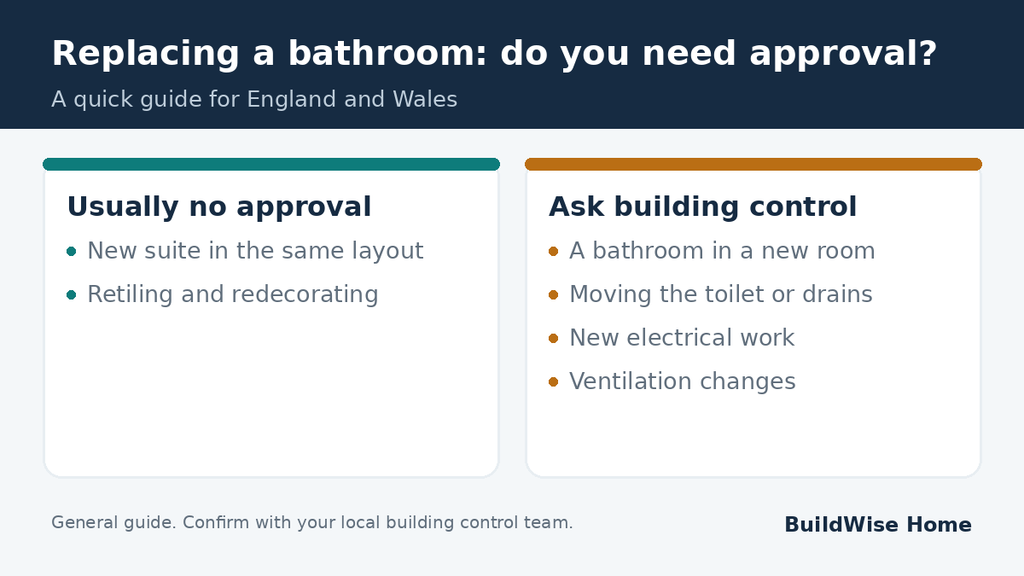
- a new bath, toilet, basin or shower in the same positions
- new taps, shower fittings and accessories
- new tiles and flooring
- redecorating
When building regulations do apply
A bathroom in a room that didn’t have one
Creating a new bathroom, for example in a bedroom or storage space, is likely to need approval. The room needs adequate ventilation and drainage, and building control may inspect the drainage and any structural alterations.
Moving the toilet, bath or shower
Moving fittings to a new position usually means new pipework and drainage, which can need approval. Ask building control before you start. Our guide to the building regulations to replace a kitchen explains the same principle for kitchens.
Electrical work
New electrical work in a bathroom must meet the electrical safety rules, and sockets aren’t permitted in a bathroom. Use a registered electrician and ask for a certificate when the work is done.
Ventilation
A bathroom without a window needs an extractor fan. One guide gives the minimum extract rate as 15 litres per second. A toilet-only room can usually rely on a window instead. If you’re upgrading, a ducted fan helps reduce condensation and mould.
Heating
If a radiator or boiler is moving at the same time, see our guide to the building regulations to move a boiler.
Do you need planning permission?
Usually not for work inside your home. If your home is listed, you need listed building consent for significant changes.
Flats and leasehold homes
If you live in a flat, check your lease and ask your freeholder or management company before changing pipes, drains or the layout.
What to do before you start
- Decide exactly what is changing: layout, plumbing, drainage, electrics, ventilation.
- If anything on the list above applies, contact your local building control team.
- Use registered tradespeople for electrical and gas work, and keep their certificates.
- Keep all the paperwork together for when you sell.
Questions to ask your installer
These questions help you work out whether building regulations to replace a bathroom apply to your job:
- Is my layout changing, or is this a like-for-like swap?
- Will you move any drainage or pipework, and does that need approval?
- Who handles the electrical certificate?
- Is the extractor fan included, and does it meet the ventilation rules?
- Will I receive all the certificates when the work is finished?
What happens if you skip it?
Unapproved work can be unsafe, and buyers’ solicitors often ask for certificates. Poor drainage or ventilation can also cause damp and mould that is expensive to fix.
Scotland and Northern Ireland
Scotland and Northern Ireland have different systems, so don’t rely on this guide there. Contact your local council.
Frequently asked questions
Do I need building regulations to replace a bath with a shower?
Swapping like for like in the same place is usually a refit, but if the waste or pipework moves, check with building control.
Do I need an extractor fan in a bathroom?
A bathroom with no window needs one. A toilet-only room can usually use a window.
Do I need an electrician for a bathroom?
For any new electrical work, yes. A registered electrician can certify it.
Can I turn a bedroom into a bathroom?
Yes, but it’s more than a refit. Expect building regulations to apply for ventilation and drainage.
Sources
This guide is based on information from the Planning Portal, Checkatrade and Warwick District Council, reviewed in November 2026. It is general information, not professional advice. Last updated: 3 November 2026.
One Comment
Comments are closed.