How Much Does It Cost to Remove a Stud Wall in the UK? (2026 Guide)
The cost to remove a stud wall in the UK is usually about £400 to £1,000 for a small, simple wall, and about £800 to £1,750 for larger partition walls, as long as the wall is genuinely non-load-bearing. A wall that turns out to be structural costs much more.
Typical cost to remove a stud wall
UK cost guides give broadly similar figures:
- Removing a simple, non-structural stud wall and making good: about £400 to £900
- A builder’s rule of thumb quoted in a national magazine: a stud wall typically won’t cost more than £1,000
- For comparison, a load-bearing wall: about £1,500 to £5,000 all in, depending on size and scope
- Real quotes for removing a partition wall, by size: about £800 to £1,750 (see the table below)
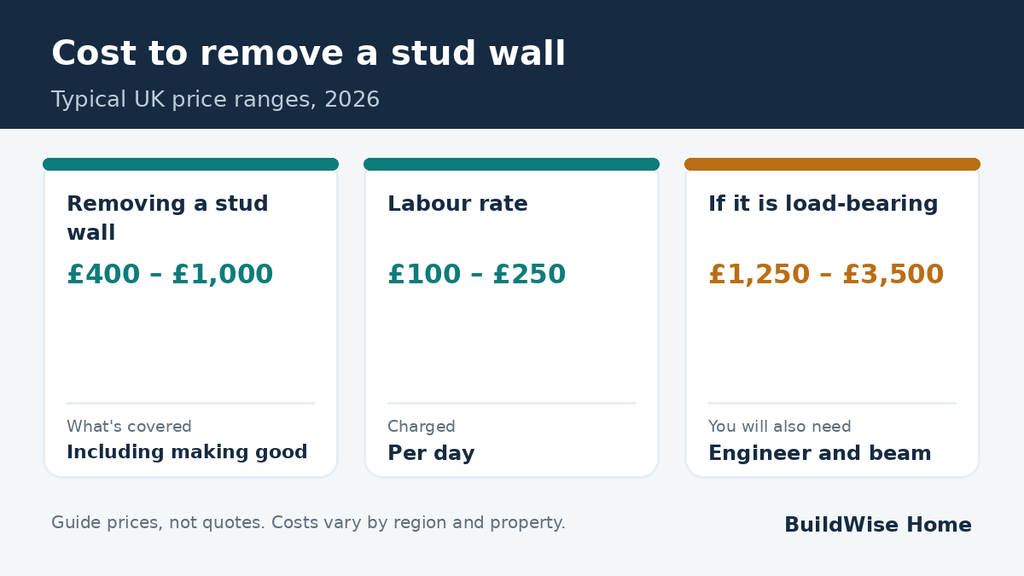
Labour is usually charged at about £100 to £250 a day. Plasterers and decorators are often quoted separately, at roughly £300 a day each in one national guide.
These are guide prices, not quotes. Costs vary by region, and London and the South East are usually higher.
How the main UK sources compare
Prices depend heavily on the size of the wall and on what each guide counts. MyJobQuote’s figures come from real quotes given to UK homeowners:
| Job | Typical total cost | Time on site |
|---|---|---|
| Single doorway opening, about 1m | £800 to £1,250 | 1 day |
| Double doorway opening, about 2m | £1,200 to £1,500 | 1 to 2 days |
| Large wall between kitchen and dining room, about 4m | £1,500 to £1,750 | 2 to 3 days |
Other sources give lower figures for simpler jobs:
- MyJobQuote’s average for removing a partition wall: about £1,750
- A builder’s platform expert quoted in Ideal Home: a stud wall typically won’t cost more than £1,000
- Best Builders: about £400 to £900 for a simple non-structural removal with basic making good
The spread is mostly about size and scope. The lower figures describe a small, simple wall with basic finishing. The higher ones come from quotes for walls of two to four metres, where there is more labour and more to make good. When you compare quotes, check that you are comparing the same size and the same list of work.
Typical prices for the finishing work
The removal is only part of the budget. These guide prices cover the work that usually follows:
- Builder or labourer day rate: about £150 to £250
- Plasterer day rate: about £150 to £250 in one guide, and about £300 in another
- Plastering one wall: about £250 to £400
- Patching a damaged area: about £100 to £300
- Skimming: about £25 per square metre
- Plastering a whole room: about £630 on average, usually over one to two days
- Repairing the ceiling after a wall comes out: around £390
- An electrician to move sockets and switches: about £50 to £95 an hour
Is it really a stud wall?
A stud wall is a timber or metal frame covered in plasterboard on both sides. It is hollow and light, and it is usually non-structural. But not always. Some stud walls carry weight from the floor above, and they can’t be treated like a simple partition.
Before you book anyone, check:
- Does the wall run across the joists above, or the same way as them?
- Is there a wall directly above or below it?
- Is it supporting the ceiling or the floor above?
If you are unsure, have a structural engineer confirm it. A visit costs about £200 to £300, which is far cheaper than a mistake. Our guide to the structural engineer cost to remove a wall explains what to expect, and our guide to the building regulations to knock down a wall explains what happens if the wall turns out to be load-bearing. For the general case, see our guide to the cost to remove a load-bearing wall.
What the price usually includes
- Taking down the wall and removing the rubble
- Basic making good where the wall met the floor, ceiling and neighbouring walls
What’s often not included
- Replastering and redecorating
- New flooring where the wall stood
- Moving electrics, pipes or radiators
- Skip hire, if the builder isn’t including it
What pushes the price up
- Wiring, sockets, pipes or radiators inside or on the wall
- A larger or taller wall
- Flooring that now needs patching or replacing
- Plastering and decorating the whole room, not just the gap
- Higher labour rates in London and the South East
Do you need building regulations approval?
Taking down a genuine non-load-bearing wall doesn’t normally need approval. The exception is a wall that protects a fire escape route, such as one next to a staircase. Check with your local building control team if you aren’t sure.
Removing a wall versus building a new one
If you are moving a wall rather than removing it, you will pay twice: once to take the old one out and once to build the new one. One guide puts a basic new stud wall at about £800 to £1,000. Checkatrade gives about £800 to £900 for a timber stud wall of 3 metres by 2.4 metres, over two to three days, with materials of about £175 to £200 of that. Add plastering and decorating on top.
Example budgets
To show how the pieces add up, here are three worked examples. They are illustrations made by adding published figures together, not real quotes, so use them for planning and not to price a job.
Example 1: a doorway-sized opening of about 1 metre
- Builder’s price for the removal: £800 to £1,250
- Patching the plaster: £100 to £300
- Decorating: £150 to £800
- Estimated total: about £1,050 to £2,350
Example 2: a double doorway of about 2 metres
- Builder’s price for the removal: £1,200 to £1,500
- Plastering one wall: £250 to £400
- Decorating: £150 to £800
- An electrician to move sockets and switches, about 2 hours: £100 to £190
- Estimated total: about £1,700 to £2,890
Example 3: a large wall of about 4 metres between a kitchen and dining room
- Builder’s price for the removal: £1,500 to £1,750
- Repairing the ceiling: about £390
- Decorating: £150 to £800
- Estimated total: about £2,040 to £2,940
The builder’s price figures come from MyJobQuote’s real-quote data. Plastering, ceiling and electrician figures also come from MyJobQuote, and some quotes may already include basic making good. Try our wall removal cost calculator to estimate your own job.
Can you remove it yourself?
A confident DIYer can remove a confirmed non-structural stud wall. Before you start, check for hidden cables and pipes, and switch off the power to circuits that run through it. If anything about the wall is unclear, pay a professional.
How to keep the cost down
- Get at least three written quotes that say exactly what is included.
- Ask whether making good, plastering and decorating are in the price.
- Do the work while the room is already being redecorated.
- Confirm the wall’s type first, so quotes don’t change halfway through.
Frequently asked questions
How long does it take to remove a stud wall?
Usually around one to two days for the removal, plus extra time for making good and decorating.
How do I know if a wall is a stud wall?
A hollow sound when you tap it can suggest one, but don’t rely on that alone. If you’re unsure, ask a professional.
Does the price include plastering?
Often not. Ask whether making good, plastering and decorating are included.
Do I need a permit to remove a stud wall?
Usually not, unless it protects a fire escape route or the property is listed.
Sources
Prices in this guide are based on UK cost guides from Ideal Home, MyJobQuote, Checkatrade and Best Builders. MyJobQuote figures were checked again on 17 November 2026. They are estimates, not quotes. Last updated: 17 November 2026.
2 Comments
Comments are closed.